
Federal authorities have brought charges against a post-doctoral researcher accused of illegally importing biological material into the United States, Fox News reports, marking the latest case in a series of investigations involving visa-holding academics and restricted research substances.
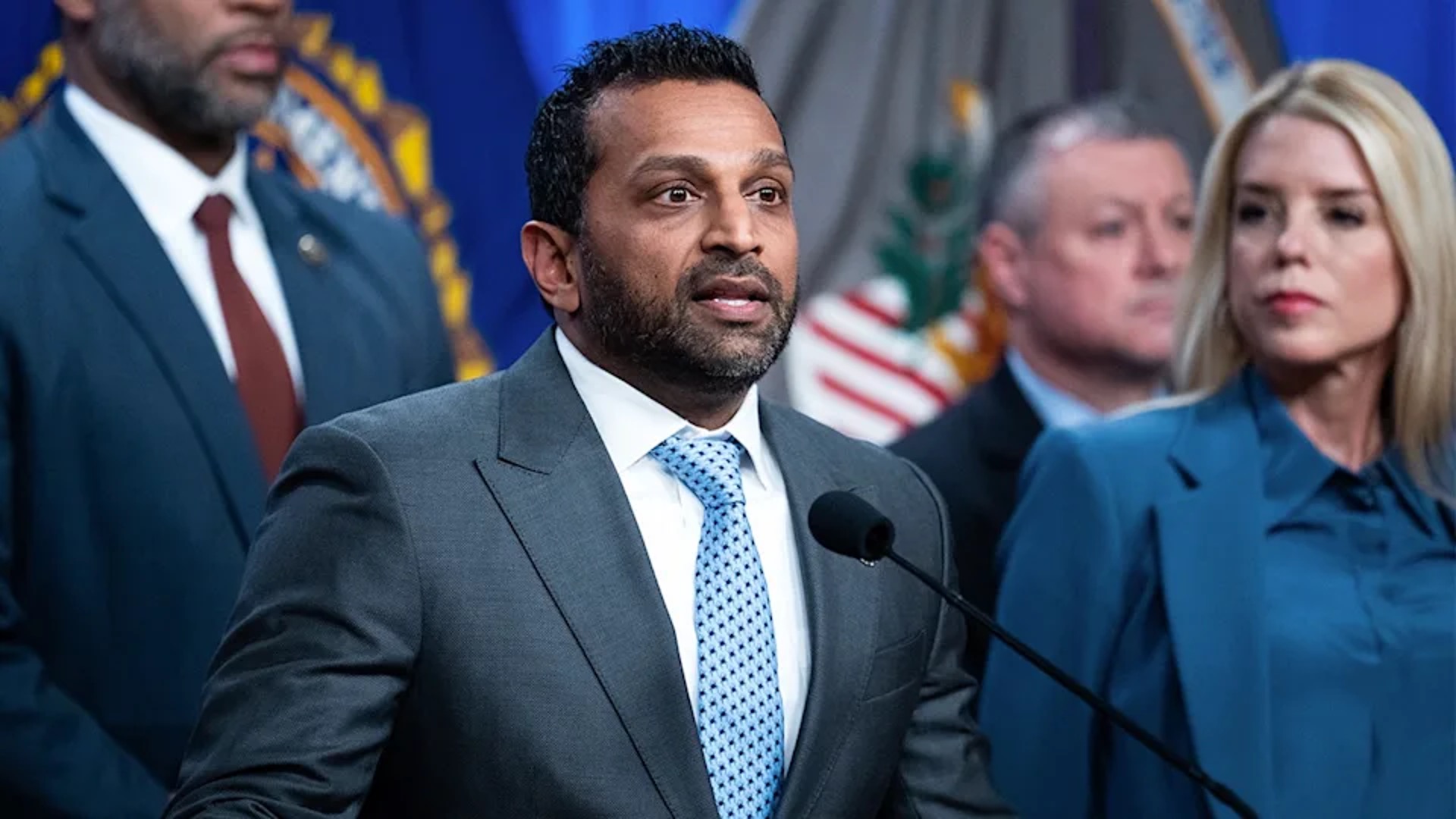
FBI Director Kash Patel announced Friday that Youhuang Xiang, a post-doctoral researcher in the U.S. on a visa, was charged with allegedly smuggling Escherichia coli (E. coli) into the country and making false statements to authorities. Patel did not disclose the name of the university associated with the case.
“This is yet another example of a researcher from China, given the privilege to work at a U.S. university, who then allegedly chose to take part in a scheme to circumvent U.S. laws and receive biological materials hidden in a package originating from China,” Patel wrote on X.
He warned that improperly handled biological agents could pose serious risks, adding: “If not properly controlled, E. coli and other biological materials could inflict devastating disease to U.S. crops and cause significant financial loss to the U.S. economy.”
Federal authorities have brought charges against a post-doctoral researcher accused of illegally importing biological material into the United States, Fox News reports, marking the latest case in a series of investigations involving visa-holding academics and restricted research substances.
FBI Director Kash Patel announced Friday that Youhuang Xiang, a post-doctoral researcher in the U.S. on a visa, was charged with allegedly smuggling Escherichia coli (E. coli) into the country and making false statements to authorities. Patel did not disclose the name of the university associated with the case.
“This is yet another example of a researcher from China, given the privilege to work at a U.S. university, who then allegedly chose to take part in a scheme to circumvent U.S. laws and receive biological materials hidden in a package originating from China,” Patel wrote on X.
He warned that improperly handled biological agents could pose serious risks, adding: “If not properly controlled, E. coli and other biological materials could inflict devastating disease to U.S. crops and cause significant financial loss to the U.S. economy.”

Patel credited the FBI’s Indianapolis and Chicago field offices for their role in the investigation and thanked U.S. Customs and Border Protection for its assistance. He also urged academic institutions to exercise greater oversight.
“Ensure your researchers know that there is a correct and legal way to obtain a license to import/export approved biological materials, and it must be followed without exception,” Patel said.
The case follows earlier prosecutions involving visa holders accused of illegally importing research materials since the Trump administration launched a broad immigration enforcement effort in January 2025.
In November, the Justice Department charged three Chinese national scholars with conspiring to smuggle biological materials into the United States while working in a university laboratory. Prosecutors alleged the individuals made false statements to CBP officers to bring in materials related to roundworms from China.
“Allegedly attempting to smuggle biological materials under the guise of ‘research’ is a serious crime that threatens America’s national and agricultural security,” Attorney General Pam Bondi said at the time.
The defendants — Xu Bai, 28, Fengfan Zhang, 27, and Zhiyong Zhang, 30 — were participating in J-1 academic exchange programs and conducting research at the University of Michigan’s Shawn Xu Laboratory, according to federal authorities. Investigators alleged they received multiple concealed shipments of roundworm-related materials from Chengxuan Han, a Chinese Ph.D. student based in Wuhan.
Han had previously worked at the University of Michigan and was later convicted on smuggling and false statement charges before being removed from the United States.
Another high-profile case emerged in February, when Kseniia Petrova, a Russian-born scientist and Harvard University cancer researcher, was detained at Boston Logan International Airport. Authorities accused Petrova of attempting to bring frog embryos into the country without proper declaration or permits.
Her attorney, Gregory Romanovsky, said Petrova was transporting the embryos at the request of a professor at a French laboratory collaborating with Harvard. According to Romanovsky, the samples were collected in Paris and intended for delivery to Harvard, and Petrova was unaware they needed to be declared at customs.
Federal officials disputed that account. “The individual was lawfully detained after lying to federal officers about carrying substances into the country,” the Department of Homeland Security said in a post on X. “A subsequent K9 inspection uncovered undeclared petri dishes, containers of unknown substances, and loose vials of embryonic frog cells, all without proper permits.”
THE THIRD FORCE
