
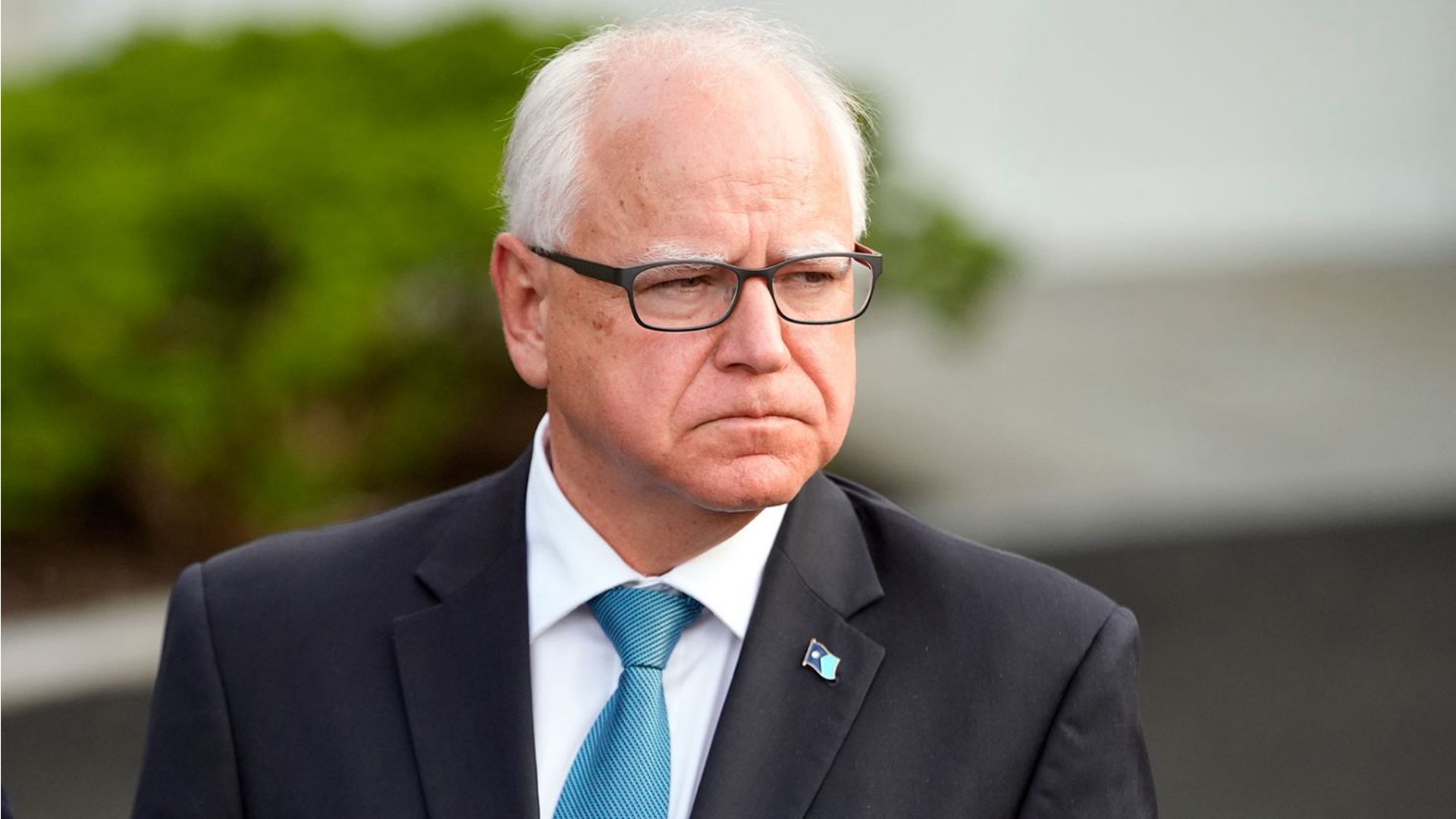
Minnesota’s race for governor has again been thrust into the national spotlight, as a $1 billion fraud case tied to pandemic-era nutrition programs continues to dominate political debate. Republican challenger Dr. Scott Jensen spoke to Fox News Digital about his belief that Gov. Tim Walz is not only directly responsible for the controversy, but suggested that a “cover up” that’s “worse than Watergate” is at play.
The controversy stems from what federal prosecutors have called the largest COVID-19 food-aid fraud scheme in the country, involving allegations that the nonprofit Feeding Our Future and affiliated groups siphoned hundreds of millions from child-nutrition programs. Jensen contends that Walz bears responsibility for failures of oversight and accuses the governor of obscuring the timeline of what his administration knew.

Minnesota’s race for governor has again been thrust into the national spotlight, as a $1 billion fraud case tied to pandemic-era nutrition programs continues to dominate political debate. Republican challenger Dr. Scott Jensen spoke to Fox News Digital about his belief that Gov. Tim Walz is not only directly responsible for the controversy, but suggested that a “cover up” that’s “worse than Watergate” is at play.
The controversy stems from what federal prosecutors have called the largest COVID-19 food-aid fraud scheme in the country, involving allegations that the nonprofit Feeding Our Future and affiliated groups siphoned hundreds of millions from child-nutrition programs. Jensen contends that Walz bears responsibility for failures of oversight and accuses the governor of obscuring the timeline of what his administration knew.
“In Minnesota, I don’t think that there’s any way to cut it other than to say the buck has to stop somewhere,” Jensen said in an interview with Fox News Digital. “And it’s always been that the buck stops at the governor’s desk. Arguably, the governor is the CEO of the state of Minnesota and the business of the government. And Tim Walz has been derelict in doing his duties, and he’s absolutely corrupted common sense.”
Jensen argues that key decisions made in 2020 and 2021 reveal a discrepancy between what the governor has said publicly and how the state actually responded.
“Tim Walz and the Minnesota Department of Education knew in 2020 that there was a problem… but they didn’t get the FBI involved until 2021,” Jensen claimed. “And yet they’ve made claims that as soon as they learned about it, they got the FBI involved. That’s not true. Their timeline’s a year off.”
He maintains that the delayed escalation reflects a broader pattern of shifting blame rather than accepting responsibility.
“At the end of the day, he’s demonstrated a very skilled approach to deflecting, so that he’s not being honest,” Jensen said.
Several of Jensen’s criticisms focus on the administration’s response after the first federal indictments in 2022. Walz suggested at the time that court orders had restricted the state’s ability to stop payments, pointing to rulings by district court judge John Guthman. Media reports later highlighted Guthman’s unusually forceful rebuttal, in which he accused the governor of making “inaccurate statements.”
“When Judge Guthman did that, then you saw Tim Walz and Keith Ellison try for someone else they could blame it on,” Jensen said. “So they blamed it on the FBI and said, ‘Well, the FBI told us we had to keep paying because we’re not supposed to interfere with their investigation.’ And the FBI said, ‘We didn’t make you continue fraudulent payments to the Feeding Our Future agency.’”
Jensen believes additional revelations are still likely.
“The underlying question has to be: is there something more nefarious than this?” he said. “Is there literally sequestration of funds that at some point in time could be paid back to people when things have calmed down? Is there some pay-to-play scheme that we haven’t yet been informed about?”
He added that if such conduct were ever substantiated, “then you have to ask yourself the question: will there be at some level a need for criminal prosecution to take place of some Minnesota elected officials?”
Scrutiny from Washington has increased in recent days. The Small Business Administration has launched inquiries into Minnesota-based Somali groups it says are linked to the fraud network, citing failures in oversight. House Oversight Committee Chairman James Comer has also opened an investigation, stating that “because of Governor Walz’s negligence, criminals — including Somali terrorists — stole nearly $1 billion from the program while children suffered.”
Former President Donald Trump has directed new federal actions targeting pandemic-era fraud in Minnesota, characterizing the state as a “hub of money laundering activity.” Senior members of his administration announced additional probes this week, including Treasury Department inquiries into allegations that some funds may have reached the militant group al-Shabaab, according to Secretary Scott Bessent.
Jensen argues that the trajectory of the scandal evokes echoes of historic political breaches.
“With where it’s gone from the beginning to now, recognizing that there’s been an interest in covering this up, for many people it has some of the haunting reminders of Watergate,” he said. “And yet, in this way, this time, it could even be worse, because it’s possible that there’s something far more nefarious than simply covering something up. It could be a pay to play scheme that involves elected officials.”
Asked how he views the governor’s record after two terms, Jensen was blunt.
“Tim Walz’ legacy right now would be fraud at an unprecedented level,” he said. “And I think from his policies, I think people would say he seemed to worship the ground that AOC and Bernie Sanders walked on. He went from someone who many people who knew him earlier in life thought of as a moderate person to a person who was literally living on the five-yard line of the hard left part of the Democratic field.”
Adapted From: