
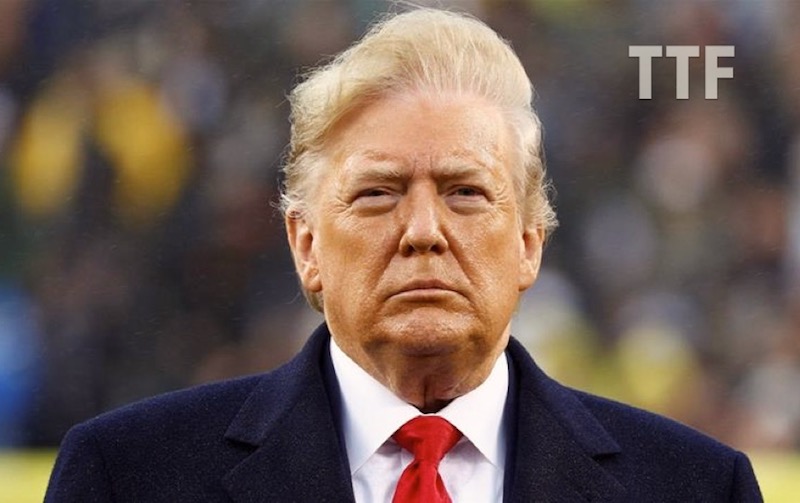
President Donald Trump has announced a new set of immigration measures he said would reshape U.S. migration policy, following the shooting of two National Guard members in Washington that left one dead.
In a series of social media posts late Thursday, Trump proposed what he described as “reverse migration,” while outlining plans to halt immigration from unspecified developing nations, revoke citizenship from certain naturalized Americans and cut off federal benefits to non-citizens.
Trump said he would “permanently pause migration from all Third World Countries” and “denaturalize migrants who undermine domestic tranquility.” He also pledged to terminate millions of admissions approved under former President Joe Biden and to “remove anyone who is not a net asset to the United States, or is incapable of loving our Country.”
In the same posts, Trump offered no explanation of how these proposals would be carried out, nor did he clarify what he meant by “Third World Countries” — a loosely defined and widely criticized term for developing nations.

President Donald Trump has announced a new set of immigration measures he said would reshape U.S. migration policy, following the shooting of two National Guard members in Washington that left one dead.
In a series of social media posts late Thursday, Trump proposed what he described as “reverse migration,” while outlining plans to halt immigration from unspecified developing nations, revoke citizenship from certain naturalized Americans and cut off federal benefits to non-citizens.
The message marked his strongest call yet for an expansion of immigration enforcement since returning to office, coming hours after he announced the death of one of the victims — U.S. Army Specialist Sarah Beckstrom, 20.
The suspect in the attack, identified as an Afghan national, prompted Trump to intensify his public campaign against immigration.
Trump said he would “permanently pause migration from all Third World Countries” and “denaturalize migrants who undermine domestic tranquility.” He also pledged to terminate millions of admissions approved under former President Joe Biden and to “remove anyone who is not a net asset to the United States, or is incapable of loving our Country.”

In the same posts, Trump offered no explanation of how these proposals would be carried out, nor did he clarify what he meant by “Third World Countries” — a loosely defined and widely criticized term for developing nations.
Previous Trump-era immigration policies have faced repeated legal challenges, and Congress has failed for years to pass broad immigration reform legislation. Courts have also blocked or delayed enforcement of some of his earlier executive actions limiting entry into the United States.
Afghan Processing Halted
In the wake of the shooting, the White House suspended Afghan immigration proceedings and ordered a review of individuals from Afghanistan already admitted to the country.
According to a memo reviewed by Bloomberg earlier this month, the administration had already planned a broad reassessment of refugees admitted under Biden, including a freeze on new green card approvals for those individuals.
The United States has taken in more than 190,000 Afghans since the Taliban seized control of Kabul in 2021, most of them former U.S. military collaborators and their family members.
On Thursday, Joseph Edlow, the head of U.S. Citizenship and Immigration Services, said his agency had launched a wide-ranging audit in line with Trump’s directive.
In a statement posted on social media, Edlow said the agency was conducting “a full scale, rigorous reexamination of every Green Card for every alien from every country of concern.”
Expanded Restrictions Already Underway
The White House in June announced a ban on immigration from 12 countries, including Afghanistan, Haiti, Somalia and Sudan, along with restrictions affecting seven others.
During his first term, Trump imposed entry bans on travelers from Cuba, Iran, Libya, North Korea, Somalia, Sudan, Syria, Venezuela and Yemen.
Since returning to office, he has also pushed an expansion of federal immigration enforcement, sending teams into U.S. cities over objections from local officials. Advocacy groups have accused the administration of unlawfully deporting migrants in violation of court rulings and due process protections.
In addition, the administration has reduced the annual refugee admissions cap, withdrawn temporary protected status from migrants from several countries, imposed a $100,000 fee on H-1B visa applications used by technology firms and universities, and canceled thousands of visas.
The White House is also pursuing a legal challenge to the constitutional guarantee of birthright citizenship under the 14th Amendment.
Courts Block Full Shutdown — For Now
After returning to office in January, Trump signed an executive order halting all refugee admissions. That order, however, was immediately challenged in court.
An appeals court later allowed the administration to pause new refugee entries while legal proceedings continue, but also ruled that the government must continue providing services to refugees who had already arrived in the country.
Adapted From: