
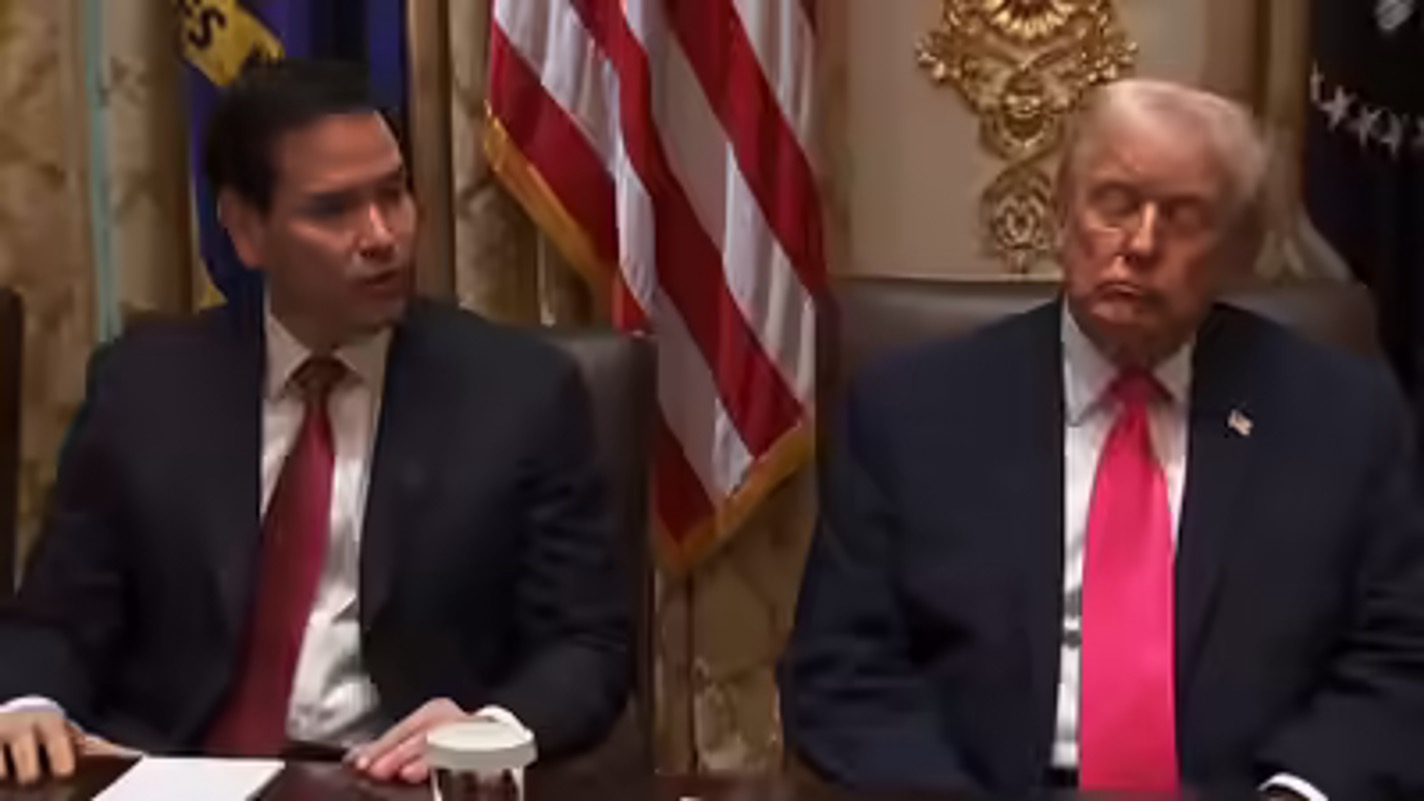
The Trump administration is preparing a federal immigration operation in Minnesota’s Twin Cities that is expected to focus on undocumented Somali immigrants, according to U.S. officials and American media reports — a development that coincides with new remarks by President Donald Trump about Somalis and immigration.
A person familiar with the planning told CBS News that hundreds of people are expected to be affected when the operation begins this week.
Trump’s remarks about Somalis were delivered Tuesday during a cabinet meeting that was televised for several hours. In blunt language, he declared he did not want more Somali immigrants in the United States.
He added the U.S. would “go the wrong way if we keep taking in garbage into our country”.
“I don’t want them in our country. I’ll be honest with you, OK. Somebody will say, ‘Oh, that’s not politically correct.’ I don’t care. I don’t want them in our country,” Trump said.

The Trump administration is preparing a federal immigration operation in Minnesota’s Twin Cities that is expected to focus on undocumented Somali immigrants, according to U.S. officials and American media reports — a development that coincides with new remarks by President Donald Trump about Somalis and immigration.
A person familiar with the planning told CBS News that hundreds of people are expected to be affected when the operation begins this week.
The New York Times first reported the enforcement action, and U.S. Immigration and Customs Enforcement (ICE) have been instructed to carry out the operation under direction from the Trump administration, the source said.
Officials at the Department of Homeland Security, which oversees ICE, declined to confirm the operation, but rejected claims that any action would be based on race.
“Every day, ICE enforces the laws of the nation across the country,” Assistant Secretary Tricia McLaughlin said in a statement.
“What makes someone a target of ICE is not their race or ethnicity, but the fact that they are in the country illegally,” she said.
The reported operation has drawn immediate criticism from Minnesota officials, who warn that it risks infringing on civil rights in a region home to one of the largest Somali populations in the United States.
Minneapolis Mayor Jacob Frey said such an operation “means due process will be violated” in his city. Leaders in the area estimate roughly 80,000 Somali-origin residents live in Minnesota, the vast majority of whom are U.S. citizens.
Minnesota state Senator Zaynab Mohamed wrote on X that “when ICE agents interact with Somalis here, they will find what we’ve been saying for years: Almost all of us are US citizens.”
Governor Tim Walz, the Democratic nominee for vice president in 2024 and a frequent critic of Trump, defended law enforcement against violent crime but condemned the scope of the proposed operation.
“We welcome support in investigating and prosecuting crime,” he said. “But pulling a PR stunt and indiscriminately targeting immigrants is not a real solution to a problem.”
Trump’s remarks about Somalis were delivered Tuesday during a cabinet meeting that was televised for several hours. In blunt language, he declared he did not want more Somali immigrants in the United States.
He added the U.S. would “go the wrong way if we keep taking in garbage into our country”.
“I don’t want them in our country. I’ll be honest with you, OK. Somebody will say, ‘Oh, that’s not politically correct.’ I don’t care. I don’t want them in our country,” Trump said.
Referring directly to Somalia, Trump described the country as lawless and unstable.
“With Somalia, which is barely a country, you know, they have no, they have no anything. They just run around killing each other. There’s no structure.”
The president also turned his criticism toward Rep. Ilhan Omar, the Democratic congresswoman from Minnesota and the first Somali-American elected to Congress, whom he has repeatedly attacked in the past.
“I always watch her,” Trump said, adding that Omar “hates everybody. And I think she’s an incompetent person”.
Omar responded on social media.
“His obsession with me is creepy,” she wrote. “I hope he gets the help he desperately needs.”
Somalia’s government declined to engage publicly with Trump’s statement. Somali Prime Minister Hamza Abdi Barre said he had not heard the remarks directly but had been briefed on them.
He noted that similar comments had previously been directed at other African countries, including Nigeria and South Africa, and said Somalia would not escalate the matter.
“There are things you pass with ‘Salaaman’,” he said, referencing a Qur’anic expression about responding peacefully to offence.
“Making an issue out of it and giving it importance is more harmful than simply moving on,” he added.
Trump’s comments mark the latest escalation in his administration’s approach toward Minnesota’s Somali population, alongside actions affecting immigration status. Last month, the president announced he would revoke Temporary Protected Status (TPS) for Somali residents in the state, a measure affecting several hundred people.
TPS was first granted to Somalis in 1991 after civil war engulfed the country.
The White House has also widened its broader immigration crackdown following last week’s fatal shooting of two National Guard members in Washington, D.C., allegedly by an Afghan man who later moved to the U.S. Trump did not reference that incident when speaking about Somalis.
Additionally, Homeland Security Secretary Kristi Noem said earlier this week her department would investigate alleged visa fraud in Minnesota.
Treasury Secretary Scott Bessent separately announced an inquiry into claims that state tax dollars may have been diverted to the Somalia-based Islamist group al-Shabab, which is affiliated with al-Qaeda. The investigation follows unverified U.S. media reports, which have been denied by the militant organization.
Somalia remains among the poorest nations in the world, and many of the Somali immigrants living in the United States arrived in the 1990s during the country’s prolonged civil war.
ADEPTED FROM: BBC AND VARIOUS SOURCES
