
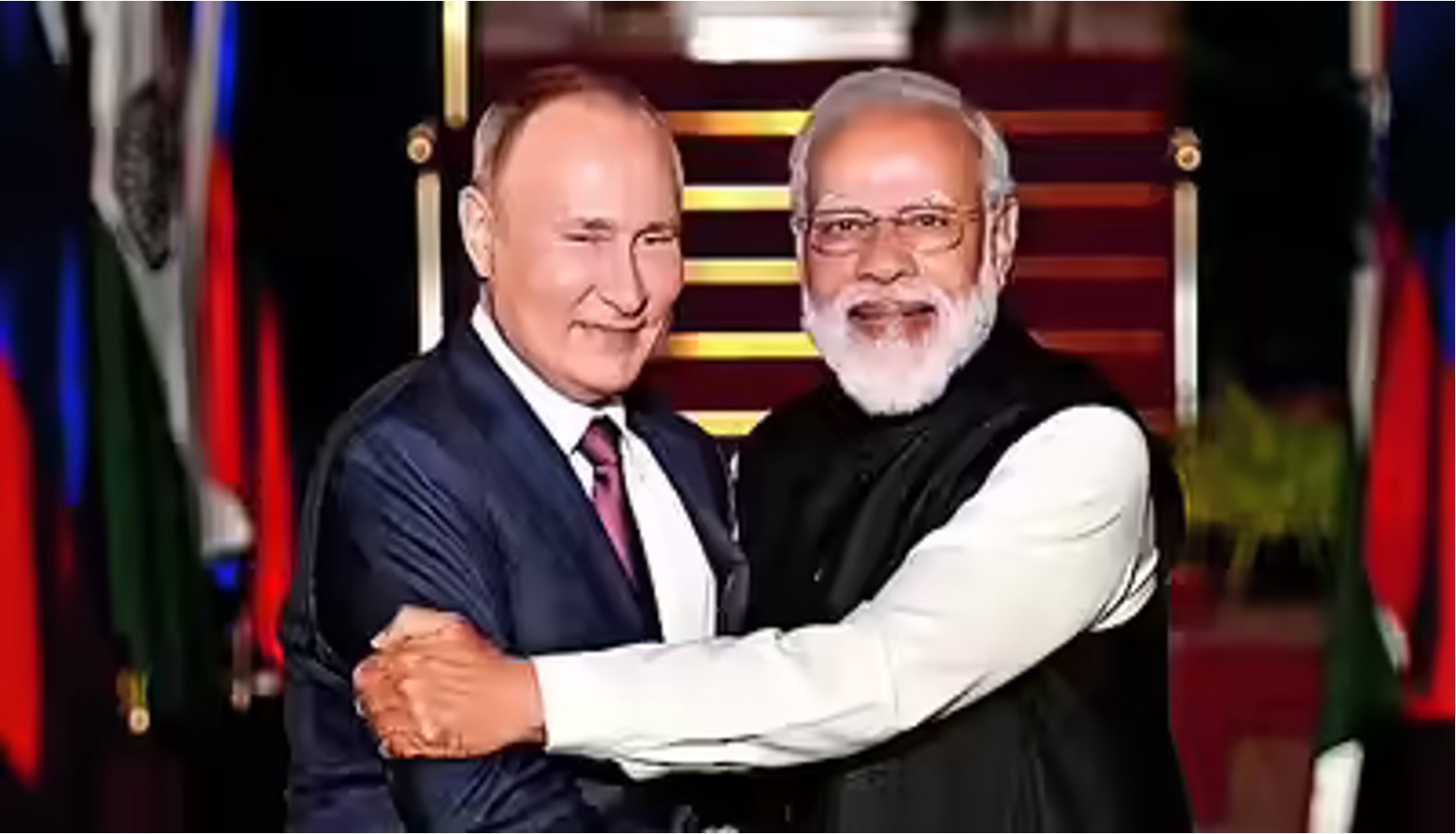
Almost four years after a brief pandemic-era visit, Vladimir Putin arrived in New Delhi this week to meet Narendra Modi—but the international landscape he is navigating bears little resemblance to the one he last encountered.
In late 2021, the Russian president’s five-hour stop in India focused on arms deals and economic cooperation, and on renewing what both sides described as a “special relationship.” That visit came just months before Russia’s invasion of Ukraine would leave the Kremlin isolated in Western capitals and sharply curtail Putin’s freedom to travel.
The shore beneath India’s own foreign policy has also shifted. Analysts say Donald Trump’s return to the White House has disrupted years of careful U.S.–India courtship, following sharp public criticism of Delhi and the imposition of heavy tariffs on Indian imports.
Against that backdrop, Putin’s arrival on Thursday is being read as more than ceremonial. Observers describe the summit as both a signal of continuity between Moscow and New Delhi and a declaration that neither intends to fold under American pressure.

Almost four years after a brief pandemic-era visit, Vladimir Putin arrived in New Delhi this week to meet Narendra Modi—but the international landscape he is navigating bears little resemblance to the one he last encountered.
In late 2021, the Russian president’s five-hour stop in India focused on arms deals and economic cooperation, and on renewing what both sides described as a “special relationship.” That visit came just months before Russia’s invasion of Ukraine would leave the Kremlin isolated in Western capitals and sharply curtail Putin’s freedom to travel.
The shore beneath India’s own foreign policy has also shifted. Analysts say Donald Trump’s return to the White House has disrupted years of careful U.S.–India courtship, following sharp public criticism of Delhi and the imposition of heavy tariffs on Indian imports.
Against that backdrop, Putin’s arrival on Thursday is being read as more than ceremonial. Observers describe the summit as both a signal of continuity between Moscow and New Delhi and a declaration that neither intends to fold under American pressure.
Moscow seeks a return to “normal relations”
The timing matters for the Kremlin. Putin landed in Delhi days after rejecting a U.S.-backed proposal on Ukraine, convinced recent battlefield gains have strengthened Russia’s negotiating position.


For Moscow, the act of traveling is itself the message, said Petr Topychkanov of the Stockholm International Peace Research Institute.
“The importance of this visit lies primarily in the fact that it is happening at all,” he said.
“It will signal that Russia is returning to something resembling normal international relations,” Topychkanov added. “Russia is no longer anxious about the risks of political isolation.”
India’s balancing act grows harder
India, analysts argue, enters the talks with more complicated calculations. Aparna Pande of the Hudson Institute said New Delhi is confronting its most uncomfortable strategic environment in years, shaped by “a semi-isolationist America, a weaker Russia and a very powerful China.”
The political sensitivity was underscored the day before Putin’s arrival, when the ambassadors of France, Germany and Britain published a joint opinion piece in the Times of India titled “Russia doesn’t seem serious about peace.” India’s foreign ministry responded sharply, calling it “not an acceptable diplomatic practice to give public advice on India’s relations with a third country.”
Energy, pressure and tariffs
Western governments tolerated India’s growing purchases of discounted Russian oil for most of the war in Ukraine. That posture shifted after President Trump’s Ukraine diplomacy stalled earlier this year. He publicly accused Delhi of financing Moscow by buying its crude—and followed through with an additional 25% tariff on Indian imports.
The move landed heavily in a country that has guarded its independence in foreign affairs since 1947. Pande said Delhi has reverted to its instinctive posture of strategic “hedging,” “signalling to the US it has multiple options and waiting to see where everything will fall.”
That calculation has been visible in recent, tightly choreographed meetings. Modi and Putin were last photographed together three months ago alongside Xi Jinping, images that reportedly angered Trump.
China, not Washington, looms largest
Behind the pageantry, India’s overriding concern remains its northern neighbor.
“From the Indian side – for all the talk of Russian being a great and loyal friend – the real reason that relationship is important is geography,” Pande said. “China remains the greatest threat to India for the foreseeable future and since the Soviet Union, India has always relied on Russia as a continental balancer against China.”
Beijing’s increasingly close relationship with Moscow—often described by both sides as having “no limits”—has unsettled Indian officials. Pande said India wants to “prevent Russia from ever getting too close to China and ensure it can count on Moscow to put some pressure on the Chinese.”
That anxiety has also driven a gradual effort to diversify defense supply lines. Around a decade ago, roughly 70% of India’s military equipment came from Russia. Over the past four years, that share has dropped below 40%.
Weapons sales are still expected to feature in Friday’s talks, including Russian S-400 air defense systems and Sukhoi Su-57 fighter aircraft. But, Pande said, India is now aiming for a careful equilibrium.
“India will try to strike a balance; keep purchasing enough Russia weapons to retain the alliance, but not be so dependent that if Russia suddenly cut off supplies under China’s pressure, India would be left hanging.”
“For all the bear hugs and golf buggy rides that Modi and Putin have publicly enjoyed together in recent years, this is a relationship based on pure realpolitik,” she added.
Oil and economics
Trade and energy are also central to the agenda. At a gathering with Russian economists earlier this week, Putin said Moscow intends to push cooperation with China and India “to a qualitatively new level,” despite Western sanctions.
The oil question remains delicate. Modi has said India will continue buying Russian energy. Yet new U.S. and European restrictions—targeting companies that purchase from Russia—have slowed orders from Indian private firms. At the same time, Delhi has increased imports of U.S. oil and gas in what analysts view as a gesture toward Washington.
Kremlin spokesman Dmitry Peskov acknowledged “obstacles” but insisted cooperation would continue. Sanctions would cause only “insignificant drops and decreases” in exports to India for “a very brief time,” he said, adding that Russia has developed ways to bypass restrictions over the long term.
Ukraine on the margins
Ukraine will not be absent from the discussions—but analysts say it is unlikely to dominate.
India is expected to repeat its calls for peace, without pressing either side. “Yes Modi can speak to both Putin and Zelenskyy, but aside from asking both countries to talk to each other, India doesn’t have the leverage to make a difference on either side,” Pande said.
For both capitals, then, this summit is less about reshaping the war than about managing a shifting world—one in which old alliances remain useful, but no longer secure.
Adapted From: The Guardian, Various Sources
