
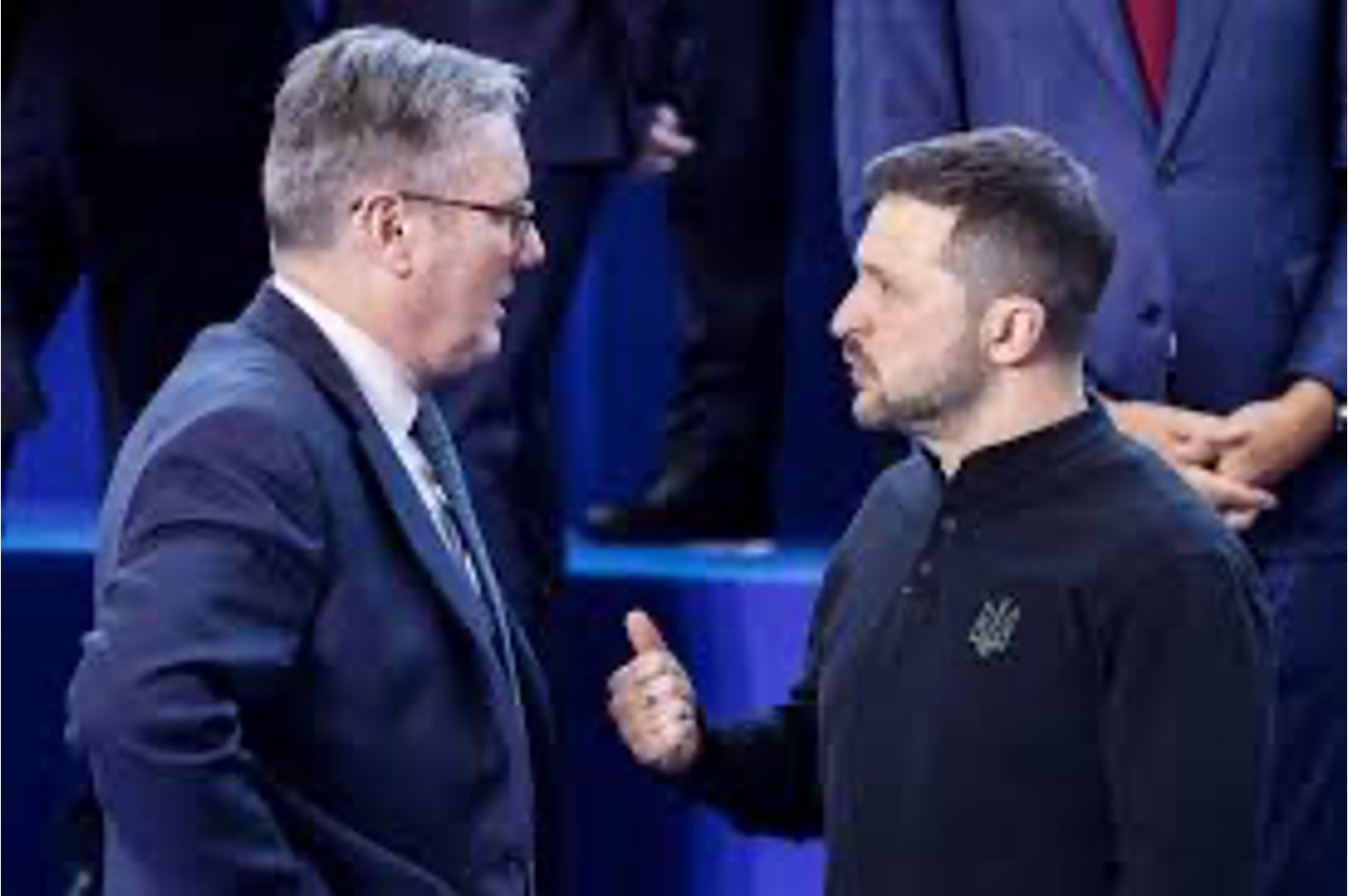
Volodymyr Zelenskyy is set to arrive at Downing Street on Monday for direct talks with Keir Starmer, Emmanuel Macron and Friedrich Merz, marking a coordinated demonstration of European support for Ukraine.
The meeting will centre on ongoing US–Ukraine negotiations over long-term security guarantees. Starmer is expected to use the session with the Ukrainian, French and German leaders to take stock of those discussions, which aim to establish a framework for Ukraine’s postwar defence.
Russia escalated its attacks late Friday, launching a combined drone and missile barrage on Ukraine’s power grid and transport links. Ukraine’s military reported the overnight launch of 653 drones and 51 missiles, claiming its air defences intercepted 585 drones and 30 missiles. Zelenskyy said the strikes were concentrated on energy infrastructure, and Ukrainian authorities accused Moscow of attempting to “weaponise” winter conditions by cutting off heat and electricity to civilians.

Volodymyr Zelenskyy is set to arrive at Downing Street on Monday for direct talks with Keir Starmer, Emmanuel Macron and Friedrich Merz, marking a coordinated demonstration of European support for Ukraine.
The meeting will centre on ongoing US–Ukraine negotiations over long-term security guarantees. Starmer is expected to use the session with the Ukrainian, French and German leaders to take stock of those discussions, which aim to establish a framework for Ukraine’s postwar defence.
Their gathering follows a virtual conference held roughly two weeks earlier among members of the “coalition of the willing,” where the same four leaders examined proposals for a European peacekeeping force that could be deployed if a ceasefire takes hold. According to a statement released by the European Council after that call, the three European leaders expressed full backing for “President Trump’s comments that the current line of contact must be the starting point for any talks”.
That statement was issued against the backdrop of criticism surrounding a draft peace plan forged quietly between US and Russian representatives. The initial version, attributed to Trump’s envoy Steve Witkoff and Kremlin adviser Kirill Dmitriev, would have imposed far-reaching restrictions on Ukraine’s military and political autonomy. Kyiv viewed those terms as tantamount to capitulation. Ukrainian officials amended the document last month, stripping out several of Russia’s maximalist demands, but fighting has continued regardless.
Russia escalated its attacks late Friday, launching a combined drone and missile barrage on Ukraine’s power grid and transport links. Ukraine’s military reported the overnight launch of 653 drones and 51 missiles, claiming its air defences intercepted 585 drones and 30 missiles. Zelenskyy said the strikes were concentrated on energy infrastructure, and Ukrainian authorities accused Moscow of attempting to “weaponise” winter conditions by cutting off heat and electricity to civilians.

Meanwhile, US and Ukrainian delegations are entering a third day of negotiations in Florida, where the Trump administration is pressing Kyiv to accept a US-backed deal. Several provisions remain contentious. Vladimir Putin has already rejected elements of the proposal, with Ukraine’s territorial integrity and future deterrence measures emerging as key obstacles for Moscow.
Starmer has repeatedly underscored that the shape of any settlement must be determined by Ukraine itself. He has argued that a peacekeeping force formed by the coalition of the willing would serve a “vital role” in upholding any security guarantees.
On Friday, negotiators from both the US and Ukraine said that achieving “real progress” would depend entirely on “Russia’s readiness to show serious commitment to long-term peace”.
The White House published its updated national security strategy overnight on Saturday, stating that the US remains committed to ensuring Ukraine’s survival as a “viable state.” At the same time, the document placed renewed emphasis on stabilising relations with Moscow, identifying an end to the conflict as central to US efforts to “re-establish strategic stability with Russia”.
Adapted From: